
If you bought your home in 2021 or 2022, you may be feeling it.
Prices in some neighborhoods have softened. Rates are still well above what they were when you signed your loan papers. Your monthly payment that once felt manageable is now a stretch. And when you look at what homes near you are actually selling for, the number is closer to what you owe than you would like it to be.
You are not imagining it, and you are not alone. A growing number of homeowners across North Carolina and South Carolina are quietly facing the same math problem. This article is an honest look at what is actually happening in the Carolinas market right now, what has changed in the last two years, and what your options are if your home is underwater or heading that way.
If you want the full explanation of what a short sale is and how the process works step by step, that is all covered at shortsaleadvisors.us. What we are talking about here is the 2026 picture.
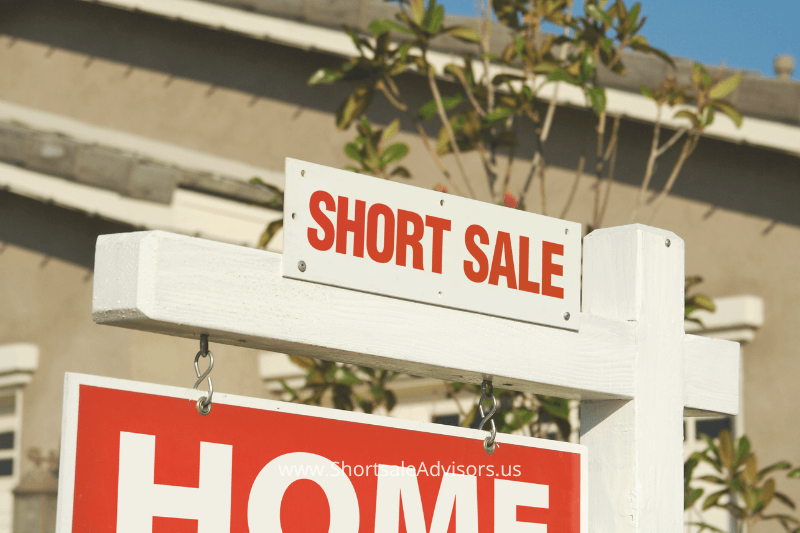
The Market Has Shifted. Here Is What That Actually Means for Sellers in Trouble.
The Charlotte metro is not crashing. Let us be clear about that. Home values are still growing, just slowly. The median sale price in the Charlotte area reached $415,000 in March 2026, up from $405,000 a year earlier, according to Canopy MLS data. That is healthy, measured appreciation.
But a 2.5% annual gain does not help you if you bought at the absolute peak of the market in mid-2022 with a small down payment, and prices in your specific neighborhood or price band have not recovered enough to cover your loan balance. That is a very different situation from someone who bought in 2019 and has four years of equity cushion.
Here is what the data actually shows: of the homeowners who purchased at the peak of the market between May and July 2022, nearly 10% are now marginally underwater and more than 30% have less than 10% equity. Those are national figures, but the pattern holds in markets like Charlotte, Gastonia, and the York County corridor where prices accelerated sharply during the pandemic frenzy.
Approximately 1.2 million homeowners nationwide, equivalent to 2.2% overall, sat in negative equity at the close of the most recent quarter, a number that increased by 216,000 from 12 months ago. That is still low by historical standards. But the trend is moving in one direction, and the homeowners feeling it most are those who bought with FHA or VA loans, minimal down payments, or who stretched their budget to get in at peak prices.
Meanwhile, the supply of homes in the Charlotte-Concord-Gastonia metro area has seen a meaningful rebound, with active residential listings climbing to approximately 10,632 units as of early 2026, a 19.2% increase compared to the same time last year. More supply means more competition. If you need to sell a home that is not in the strongest condition or priced below comparable listings, you are competing against a lot more inventory than you were two years ago.
And homes are sitting longer. Homes in Charlotte are now spending a median of 71 to 72 days on the market before going under contract. That is not alarming, but it is nearly double the pace sellers enjoyed in 2021. If you are already behind on payments and hoping to quickly list and close before a foreclosure notice arrives, that timeline matters a great deal.
South Carolina Homeowners: You Are in a High-Watch Zone Right Now
If you are in the Rock Hill, Fort Mill, or Indian Land area, you need to pay close attention to what is happening statewide.
South Carolina posted one of the nation’s highest foreclosure rates in January 2026, with one in every 2,351 housing units having a foreclosure filing. That placed the state among the five worst in the country, alongside Delaware, Nevada, Florida, and Maryland.
Foreclosure activity nationally is up 18% from a year ago, with both foreclosure starts and completed foreclosures posting annual gains. Metro areas registering some of the worst foreclosure rates include Columbia, SC, suggesting the stress is not isolated to coastal or rural communities but is showing up in mainstream South Carolina markets.
Raleigh, NC recorded a notable annual jump in foreclosure starts, rising from 68 to 146 in April 2026. Fayetteville has also appeared on national distressed market watch lists. These are not crash signals, but they are signals. Lenders are moving forward on properties where homeowners have stopped communicating or run out of time.
The homeowners who avoid foreclosure are almost always the ones who reached out early, before the process got deep. The ones who end up losing the most are the ones who waited, hoping something would change.

The Tax Picture Changed in 2026. This Is Critical.
This is the single most important update from 2024 to now, and most homeowners do not know about it yet.
For years, a federal tax provision protected homeowners who completed a short sale from owing income tax on the forgiven debt. The Qualified Principal Residence Indebtedness (QPRI) exclusion, which applied through 2025 under the Consolidated Appropriations Act, allowed homeowners to exclude up to $750,000 of forgiven mortgage debt from federal taxable income. That exclusion expired on January 1, 2026.
What that means in plain language: if your lender forgives $60,000 on a short sale that closes in 2026, the IRS may treat that $60,000 as income. At an effective tax rate of 22%, that is a $13,200 federal tax bill on money you never actually received. This is a real and significant change from the last time most people read about short sales.
There are still exceptions. The exclusion can still apply to debts forgiven as the result of a written agreement entered into before January 1, 2026, even if the actual discharge happens later. So if you had a short sale under contract or an agreement with your lender in writing before the end of 2025, you may still be protected. There are also insolvency exceptions through IRS Form 982 that some homeowners can use. A bankruptcy filing changes the picture as well.
The good news: H.R. 917, the Mortgage Debt Tax Forgiveness Act of 2025, was introduced in Congress in February 2025 and would make the exclusion permanent, applying to mortgage debt forgiven after December 31, 2025. As of this writing, the bill has been referred to the House Committee on Ways and Means but has not been passed. Congress has extended this provision before, sometimes retroactively. But it has not happened yet, and you cannot plan around legislation that does not yet exist.
The bottom line: if you are considering a short sale in 2026, talk to a CPA before you list your home. The tax math is different now than it was when you last researched this, and getting surprised by a tax bill after you have already closed is a genuinely bad outcome.
What Has NOT Changed: Why Short Sales Still Beat Foreclosure
The timeline and credit consequences of foreclosure versus a short sale remain significantly different, and that gap still matters enormously.
A foreclosure stays on your credit report for up to seven years and triggers the longest waiting periods before you can qualify for a new mortgage. Conventional loans backed by Fannie Mae and Freddie Mac typically require a seven-year waiting period after a foreclosure, while for a short sale, the standard waiting period is four years. For FHA loans, the standard waiting period is three years for both short sales and foreclosures, but documented extenuating circumstances can reduce that.
So if you eventually want to own a home again, a short sale puts you back in the market years earlier than a foreclosure does. And unlike foreclosure, where the lender controls the entire process and timeline, a short sale keeps you in a more active role. You are working with your lender, not fighting the clock while they move through legal proceedings.
There is also the human element. Foreclosures are public record. They show up in background checks. They can affect rental applications for years. A short sale handled professionally and cleanly is a very different mark than a completed foreclosure action.
What Lenders Are Doing Right Now
One thing that has changed since the last time short sales were common is how lenders approach them. During the 2008-2012 wave, many lenders were overwhelmed and short sale approvals took six months or longer. Processes have improved.
What has not changed is that lenders still need specific documentation, a clear hardship narrative, and a properly packaged submission. Lenders in 2026 are using data-driven underwriting models that evaluate your submission more quickly, but also with less tolerance for incomplete files. A disorganized package or a poorly written hardship letter still gets delayed or denied.
If you have a second mortgage, a home equity line of credit, or a VA or FHA loan, the process has additional layers that require specific handling. Each of these situations has its own negotiation path.
Who Is Actually Navigating This Well
The homeowners who are coming through this period with the best outcomes share a few things in common.
They called early. Not after the foreclosure notice. Not after they had missed six payments. They reached out when they first started doing the math and realized the numbers were not adding up.
They had representation from someone who actually knew the short sale process, not just residential real estate in general. Short sales require a different set of skills, contacts, and patience than a standard listing.
And they got a CPA involved before they signed anything. The tax picture in 2026 is more complicated than it was in 2024, and making decisions without accounting advice first is genuinely risky right now.
Nancy Braun and Showcase Realty: Certified, Local, and Honest With You
Nancy Braun is a certified short sale expert and the Broker-In-Charge at Showcase Realty LLC. Her team is licensed in both North Carolina and South Carolina, with deep familiarity in the Charlotte metro, Gastonia, Mecklenburg County, and the York County communities of Fort Mill, Rock Hill, and Indian Land.
This is not a side service. Showcase Realty has handled short sales across market cycles, with lender relationships and negotiation experience built over years of real cases. Nancy will tell you directly whether a short sale is the right move for your situation, what the realistic timeline looks like, and what the tax and credit implications are before you commit to anything.
If the answer is not a short sale, she will tell you that too. Maybe a loan modification makes more sense. Maybe a direct sale to an investor is faster. Maybe there is still time to list the home the conventional way and avoid the short sale process entirely. An honest assessment of your options is always the starting point.
Resources to Help You Right Now
HUD-Approved Housing Counselors Free or low-cost help understanding your mortgage options. Visit hud.gov or call 1-800-569-4287.
NC Housing Finance Agency Homeowner assistance and foreclosure prevention resources for North Carolina residents. Visit nchfa.com or call 1-800-393-0988.
SC Housing Foreclosure prevention counseling for South Carolina homeowners. Visit schousing.com.
IRS Publication 4681 The official IRS guide on canceled debts, foreclosures, and short sales. Available at irs.gov. Bring this to your CPA conversation.
shortsaleadvisors.us Showcase Realty’s dedicated short sale resource site. Full process explanation, FAQ, and contact information for a direct consultation with Nancy Braun.
The Window Is Now, Not Later
Markets shift slowly, then suddenly. Lenders have patience until they do not. The homes that are selling in Charlotte right now are the ones priced right and presented well. If yours is neither, and if the loan balance is already close to or above current market value, the window for a managed, professional short sale is open today. It may not be in six months.
You do not have to have this figured out before you call. You just have to call.
Reach Nancy Braun and the Showcase Realty team at (704) 997-3794, visit ShowcaseRealty.net, or go directly to shortsaleadvisors.us to request a confidential consultation. No pressure. No obligation. Just an honest conversation from someone who has been doing this a long time.
Showcase Realty LLC | 1430 S Mint St, Charlotte NC 28203 | Licensed in NC and SC
This article is for informational purposes only and does not constitute legal or tax advice. Tax laws changed significantly as of January 1, 2026. Please consult a licensed CPA and real estate attorney regarding your specific situation before making any decisions.
